How to reduce tracks to finish an Ableton project sooner
When an Ableton project accumulates too many tracks, each decision can become slower. Temporarily reducing the arrangement helps recognize what supports the idea and what only adds work. You don't need to delete valuable material to take this test: keep a complete version of the Set.
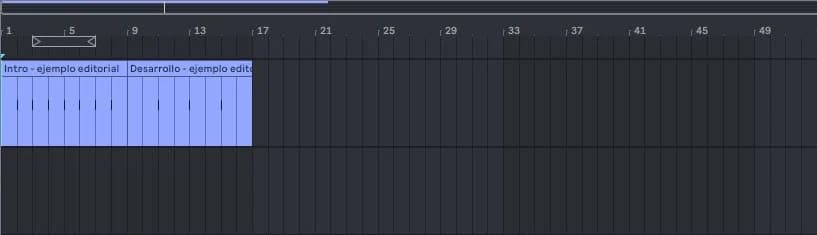
step by step
- Save a copy of the project and choose its most representative section.
- Identify the main rhythm, the serious element and the main idea.
- Deactivate the secondary layers and then recover only those that provide a clear function.
- Listen to the entire walkthrough to see if any removed layers were important in another section.
An exercise for your project
It starts from a section with many percussions and retains three different functions: pulse, accent and detail. Build a transition using inputs and outputs of those elements. Then decide if a fourth track solves something specific or simply restores density to the project.
Take it to your next session
Study an organized project to recognize what functions each section supports. Check Ableton's requirements and use that observation to simplify an idea of your own.
What should you listen to?
A track may be dispensable in the drop and necessary in the intro. That is why it is advisable to evaluate its role throughout the song and not just within a loop. Simplification should help the musical journey, not become a competition to use the fewest possible number of channels.
If it doesn't turn out as you expected
If the reduced version loses identity, it recovers the sound that defined the character before returning all the layers. If you're still not moving forward, write down the next concrete decision: end a transition, choose a bass, or export a reference. Working without a clear question encourages adding material indefinitely.
Ableton Reference
PUT THE WORKFLOW TO USE
View Ableton projects
Study an organized project to recognize what functions each section supports. Check Ableton's requirements and use that observation to simplify an idea of your own.QUICK ANSWERS
Frequently asked questions
KEEP BUILDING
Related production guides
How to prepare an Ableton project for collaboration
Sharing an Ableton project requires more than just sending a Set file. The other person needs to understand what it contains, what dependencies it uses, and what you expect it to do. Preparing this delivery reduces searches for samples and avoids confusion between versions of the same work.
How to work with long loops without getting lost in Ableton
A long loop can contain several ideas, intensity changes, and useful rests. In Ableton it is best to listen to it in its entirety before converting it into a short repeat. This way you can choose the fragments that really accompany your project and preserve the variations that give it personality.
How to import multiple samples to separate tracks in Ableton
When importing multiple samples into Ableton, first decide whether you want a sequence on a single track or simultaneous sounds on different tracks. That decision changes what you can edit and mix later.