How to mark intro, break and drop in an Ableton project
Locators help you read the structure of an Ableton project. Tags like Intro, Break, and Drop allow you to quickly return to a section, but the name doesn't create the musical change: it must correspond to something that's actually happening.
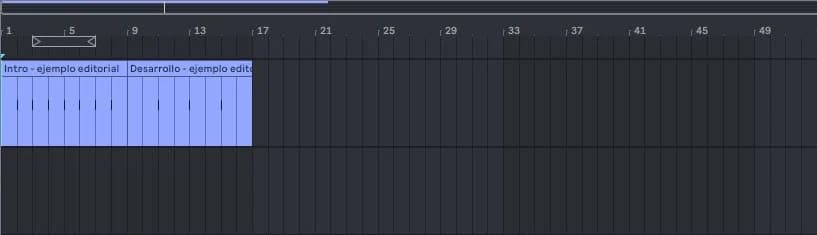
step by step
- Place the cursor at the beginning of a section in Arrangement and add a locator with the corresponding Set control or menu.
- Rename it with a short, descriptive tag. Repeat the main changes.
- Check the limits by listening to a few bars before and after. Move the marker if the change actually starts at another point.
- Use locators to compare sections without manually scrolling through the entire project.
Guided practice
Mark three moments of an idea: start, pause and return. Under each name, describe the change you are looking for, for example “percussion comes in” or “low comes out.” If you can't name a difference, maybe you don't need another section yet.
Take it to your next session
When you open an Ableton project from the catalog, study its temporal organization. Then create your own locators and use other samples to practice a different structure.
Locators must describe what is happening
Use names that help you recognize the function of each section. A mark called “enter low” may be more useful than “part three” if you are building the arrangement. The tags organize the session, but they do not require that all songs have the same number of measures.
Listen to the transition before and after each mark. If a drop is not noticeable, there may be a lack of contrast before it, not volume after it. Adjust density and inputs before stacking effects. Keep a simple version of the structure to compare whether subsequent changes actually improve the course.
If it doesn't turn out as you expected
A Drop marker does not justify raising the main volume. Contrast can come from recovering bass, changing the pattern or expanding the instrumentation. Avoid using labels that make the session more difficult to understand.
PUT THE WORKFLOW TO USE
View Ableton projects
When you open an Ableton project from the catalog, study its temporal organization. Then create your own locators and use other samples to practice a different structure.QUICK ANSWERS
Frequently asked questions
KEEP BUILDING
Related production guides
How to group and order tracks in a project in Ableton
Grouping tracks in Ableton helps you control sets of sounds and read your project. You can bring together percussion, bass, or vocals, but it's worth distinguishing between visual organization and shared processing.
How to convert an Ableton loop to a complete structure
Going from a loop to a structure in Ableton is about deciding when each element enters and exits. Duplicating everything for five minutes does not in itself create a tour. Start with simple contrasts that you can hear and explain.
How to import multiple samples to separate tracks in Ableton
When importing multiple samples into Ableton, first decide whether you want a sequence on a single track or simultaneous sounds on different tracks. That decision changes what you can edit and mix later.